
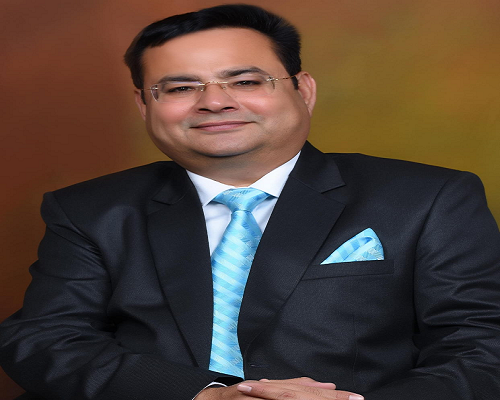
Dr. Anshu Kataria, President of the Federation of Self Financing Technical Institutions (FSFTI) and President of the Punjab Unaided Colleges Association (PUCA), has put a call on the Central Government to carry out a thorough review of land and infrastructure standards in establishing colleges and universities in India. Addressing the issue of challenges in the self-financing institutions, Dr. Kataria indicated that most of the existing regulations were designed in a different economic era and they do not fit well with the current reality. Although the regulatory control has been important in ensuring the quality of the academics, he warned that the overly stringent norms are currently serving as a constraint to the growth of higher education capacity in the nation.
Emphasizing the magnitude of the future demand, Dr. Anshu Kataria said that India will need close to 2500 universities by 2040 and about 1 lakh colleges to support the aspiration of the ever growing number of youths and to increase the Gross Enrolment Ratio of higher education in India to 55 to 60 percent. He stressed that such massive growth cannot be realized through a state funded initiative only, but it would need continued involvement of the private and self financing institutions. In his opinion, policies that are investment friendly and regulatory transparency are key to attract credible education providers to grow into new regions and underserved districts.
According to Dr. Kataria, the increasing land prices especially in urban and semi urban centres where the student demand, industry exposure and employment connections are greater have complicated the formation of new campuses due to their expensive nature. Self financing institutions, institutions that do not depend on government grants or subsidies, mostly depend on student fees to support academic operations and development of infrastructure. Rigid land and infrastructure standards in this regard add a lot of cost to the project and render education projects commercially unviable in high demand areas, thus restricting accessibility of students who need to obtain quality education near employment centres.
Returning to the regulatory environment, Dr. Kataria opined that land requirements remained highly diverse across the regulators and types of institutions and tended to pose significant compliance issues in practice. Previously, technical institutions were specified to occupy large areas of land, and the All India Council of Technical Education had requirements on engineering and technical colleges ranging between 1.5 to 7.5 acres. In the recent reforms of AICTE, the preference is not on the fixed land norms but on the built up area requirements, meaning that it has shifted the regulatory thinking. In the earlier days, polytechnic institutions were required 1.5 to 4 acres whereas 0.5 to 1 acre was required by MBA and MCA colleges.
He also added that the land used by the private university founded under the State Acts generally needed 10 to 25 acres of land whereas the medical colleges governed by National Medical Commission needed 10 to 20 acres of land with relaxation in metropolis. While law colleges governed by the Bar Council of India must have a minimum of 2 acres, teacher education colleges governed by the National Council Teacher Education must have between 2000 and 3000 square metres, architecture colleges governed by the Council of Architecture must have between 1 to 2.5 acres, pharmacy colleges governed by the Pharmacy Council of India and AICTE must have at least 0.75 to 2 acres, hotel management institutes governed by the National Council Hotel Management Catering Technology must have areas of 1 to 3 acres, and agricultural universities and
As the representative of almost 8000 self-financing technical institutions in the country, Dr. Kataria warned that unfairly high compliance costs are putting unaided colleges under a steadily growing economic strain. Various institutions which have been working in the field of workforce development since decades are obliged to constantly maintain infrastructure, laboratories, hostels and academic facilities without any kind of public financing assistance. Although he recognized the need to have qualitative standards, he opined that regulation should be relative and also sensitive to the financial facts within which the private education providers operate, or the sector may lose credible institutions which are crucial in increasing access to higher education.
The evolving character of the education ecosystem in the digital era was another issue that Dr. Kataria focused on. As more and more smart classrooms, virtual laboratories, hybrid learning models and online education delivery become the new forms of institutional quality, the land size becomes less and less relevant as the principal indicator of institutional quality. He claimed that the academic achievements could not be measured solely by the size of the campus, as the other parameters that should be considered include faculty strength, research output, innovation capacity, industry collaboration and digital infrastructure. He noted that the world higher education is slowly shifting to small-scale technology enhanced campuses, especially in urban settings, and the regulatory framework of India should also adjust with these trends.
When the All India Council on Technical Education proposed some recent relaxations on land requirements of technical institutions, Dr. Kataria welcomed the reforms but said that isolated reforms, as progressive as they might be, were not enough to unleash the magnitude of expansion needed in India. He demanded a national policy approach that is both holistic and integrates national guidelines with state level policies as well as urban development standards such that institutions do not have to deal with conflicting compliance demands. In his opinion, a synchronized system would make it less unpredictable to investors and allow them to plan in the long term in the case of the development of the education infrastructure.
Dr. Kataria inferred that the rationalisation of land and infrastructure norms is not just an institutional requirement but a national condition that has been associated with the human capital and the overall economic agenda of India. He said that it will be important to empower self-financing institutions like Aryans Group of Colleges and thousands of other unaided colleges to grow in a responsible manner to support the future education demands of the country. He requested policymakers to consider regulatory reform as an enabler toward higher education growth, labour market and India aspiring to become a global learning centre.
